
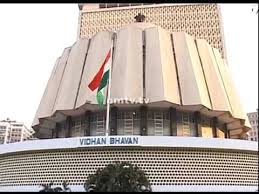
Law, especially the branch of constitutional law, need to be read, grasped and construed with the maxim salus popli suprema lex at the hindsight. The said maxim signifies that the law is quintessentially for well being of the public as well being of public is its supreme object. The events, occurrences in the political clime of Maharashtra, while successfully installed, within the framework of the Constitution of India, do not at all stand, much less finally stand, on the pedestal of the aforesaid maxim. The event in Maharashtra, in the context of post-election formation of a Government, tosses up various existential questions regarding essence of democracy, which deserve due consideration in the judicially radiated constitutional light, inter alia, on the aforesaid maxim of salus popli suprema lex. While pondering over the warp and weft of the critical events, the following factual facets call for special consideration:-
(i) The alleged ‘intrusions’ by central government in the state politics through the deviant role of governor with respect to such facets which adversely impinge upon the sacrosanct principles of federalism.
(ii) The nocturnal journey of the supreme institutions, which form bedrock of our democracy, solely to validate, vindicate, over look, aid and even abet the existential crisis in democracy, as the same carry within its length and terrain dark waves of wild vagrancy, certainly unworthy of the constitutional obligations of these institutions constitutionally devised for glorification of democracy.
(iii) The confinement, of course wrongful, by use of force, even of the elected representatives by their respective party leaders, ostensibly to prevent ‘horse-trading’ is not only ugly blot on the integrity of the polity but indicative of dismally negative self assessment regarding character and credentials of the representative elected by the citizens on the basis of their self-proclaimed standards of probity and honesty.
(iv) Wanton transmuting of convention-based and transparent procedure of ‘floor test’ into complex and dark curvatures in the nature of ‘water testing’ in power games, in full public view, including the watchful eyes of the institutionally celebrated sentinel on the que vive – Supreme Court of India.
(v) Sheer inability and helplessness of the people of India, at such critical hour of crisis, to fill the constitutional silence on the ideal patterns and combinations of power sharing in the multiparty patch-up of govt. with semantics and values of constitutionalism.
With regard to the first question of ‘intrusions’ by the Central Government and silence on the part of the Courts, which will historically be read and treated as a anti-democratic pontification from the Supreme pulpit, while the proverbially Rome was burning, the relevant aspects need to be unravelled.
With regard to the ‘intrusions’, real or unreal, emanating from central government, the constitutional scheme, which speaks of unity and not uniformity of States, besides bearing within its fold unequivocal reverence for the principles of federalism stood stressed and twisted, by Maharashtra episode. The Articles of Constitution need to be glanced to understand the nature and complexion of ‘intrusions’ by the Central Government in the federal status of Maharashtra.
Article 1 of Constitution of India declares India as a Union of States. Apparently, it depicts federal character of the Union, as is constitutionally defined, as India i.e. Bharat.
Constitution is not to be read literally and the substance of its Articles needs to be understood in a perspective, which subsumes the principles values and tenets described by the Constitutional Benches of Supreme Court, often through gilted words and phrases, such as, Constitutional morality, Constitutional limitations, Conscience of the Constitution, Soul of Constitution as well as Constitutional silences.
The relevant Articles of Constitution which need to be quick-glanced at this stage, in the context of the constitutional issues and existential crisis underlying the present day Maharashtra political scenario, are Articles 168, 170, 172, 173, 175 of the Constitution of India. The same are reproduced for convenient reference;
168. Constitution of Legislatures in States:-
(1) For every State there shall be a Legislature which shall consist of the Governor, and
(a) in the States of Andhra Pradesh, Bihar, Maharashtra, Karnataka, Tamil Nadu and Telangana, and Uttar Pradesh, two houses:
(b) in other States, one House.
(2) Where there are two Houses of the Legislature of a State, one shall be known as the Legislative Council and the other as the Legislative Assembly, and where there is only one House, it shall be known as the Legislative Assembly
170. Composition of the Legislative Assemblies
(1) Subject to the provisions of Article 333, the Legislative Assembly of each State shall consist of not more than five hundred, and not less than sixty, members chosen by direct election from territorial constituencies in the State
(2) For the purposes of clause (1), each State shall be divided into territorial constituencies in such manner that the ratio between the population of each constituency and the number of seats allotted to it shall, so far as practicable, be the same throughout the State.
Explanation:- In this clause, the expression “population” means the population as ascertained at the last preceding census of which the relevant figures have been published:
Provided that the reference in this Explanation to the last preceding census of which the relevant figures have been published shall, until the relevant figures for the first census taken after the year 2026 have been published, be construed as a reference to the 2001 census.
(3) Upon the completion of each census, the total number of seats in the Legislative Assembly of each State and the division of each State into territorial constituencies shall be readjusted by such authority and in such manner as Parliament may by law determine:
Provided that such readjustment shall not affect representation in the Legislative Assembly until the dissolution of the then existing Assembly:
Provided further that such readjustment shall take effect from such date as the President may, by order, specify until such readjustment takes effect, any election to the Legislative Assembly may be held on the basis of the territorial constituencies existing before such readjustment:
Provided also that until the relevant figures for the first census taken after the year 2026 have been published, it shall not be necessary to readjust-
- the total number of seats in the Legislative Assembly of each State as readjusted on the basis of the 1971 census; and
- the division of such State into territorial constituencies as may be readjusted on the basis of the 2001, census, under this clause.
172. Duration of State Legislatures
(1) Every Legislative Assembly of every State, unless sooner dissolved, shall continue for five years from the date appointed for its first meeting and no longer and the expiration of the said period of five years shall operate as a dissolution of the Assembly:
Provided that the said period may, while a Proclamation of Emergency is in operation, be extended by Parliament by law for a period not exceeding one year at a time and not extending in any case beyond a period of six months after the Proclamation has ceased to operate
(2) The Legislative Council of a State shall not be subject to dissolution, but as nearly as possible one-third of the members thereof shall retire as soon as may be on the expiration of every second year in accordance with the provisions made in that behalf by Parliament by law.
173. Qualification for membership of the State Legislature-
A person shall not be qualified to be chosen to fill a seat in the Legislature of a State unless he-
(a) is a citizen of India, and makes and subscribes before some person authorised in that behalf by the Election Commission an oath or affirmation according to the form set out for the purpose in the Third Schedule;
(b) is, in the case of a seat in the Legislative Assembly, not less than twenty five years of age and in the case of a seat in the Legislative Council, not less than thirty years of age; and
(c) possesses such other qualifications as may be prescribed in that behalf by or under any law made by Parliament
175. Right of Governor to address and send messages to the House or Houses
(1) The Governor may address the Legislative Assembly or, in the case of a State having a Legislative Council, either House of the Legislature of the State, or both Houses assembled together, and may for that purpose require the attendance of members
(2) The Governor may send messages to the House or Houses of the Legislature of the State, whether with respect to a Bill then pending in the Legislature or otherwise, and a House to which any message is so sent shall with all convenient dispatch consider any matter required by the message to be taken into consideration.
The 10th Schedule of the Constitution contains what is popularly described as anti-defection law, in furtherance to Article 102 (2) and Article 191 (2) of Constitution of India. The provisions of the said Anti-defection Law contain an expression ‘Original Political Party’ to distinguish and prevent the members, except where such dissenting strength is 1/3rd of the total, donning distinct political badge. The said Schedule distinguishes defection from split in the political party. Split necessitates a collective decision of walk over by 1/3 rd of the members of a legislature party, while the questions of defection and split are in the exclusive domain of the jurisdiction of the speaker or Chairman of the House, the jurisdiction of the Courts is barred as per Para 7 of the said Schedule. However, in a catena of judicial pronouncements, the amenability of such decision of Chairman of Speaker is open to judicial review by Supreme Court under Article 136 of Constitution of India on various grounds falling within ‘Jurisdictional Errors’ AIR 1971 SC 1093, AIR 1993 SC 2120, AIR 1994 SC 1558.
The fact remains that elected representatives to the Assembly read half-read and even misread the mandate in their own favour, as per their radical political perceptions, largely moulded by power-related aspirations. Such reading or mis-reading of the public mandate, often results in strategic regrouping inter se the elected representatives for the purpose of forming Government. The contentious interpretation of the public mandate are actually personal view of the political parties while it generates conflicts, turmoils and endless tactical maneuvers, which are necessarily not in consonance with what is judicially referred to as Constitutional Morality.
In such critical power sharing exercises, attempt to usurp the Constitutional Morality and Constitutional Soul is conspicuously visible. The voter as a humble citizen feels cheated, robbed and pained – the commitments of good governance turn awry and wither away.
In a recent election in Maharashtra, such power sharing exercises drove the Constitutional foundation of elected Government in a democracy, to an edge of a crisis. As the facts bear out, at the altar of power the ideologies of all political outfits stood sacrificed. It has become crystal clear that in the power games of democracy, ‘ideology’ of a political party is otiose being without any meaning or relevance. Ultimately, the governance is dragged by power sharing means and methods into a chaos and such political sin is justified by clever use of the expression ‘Common Minimum Programme’.
In S.R. Bommai Case (Supra) emphasis was laid on ensuring that any interpretation (kindly read practice) of Article 356, must preserve and not subvert the essential features of Constitution, especially democracy and federalism. The subtle exercise of power by the President was peeped into by the Court, in a specific scenario where the party in power at centre was distinct from the parties staking claim to power in the States. The Court observed that expression ‘Otherwise’ occurring in the text of said Article is camouflaged by a political thicket. The said pronouncement of the Apex Court, answers the raison d’etre of the nocturnal journeys of the democracy as again witnessed in Maharashtra. Noticing a catena of earlier judgments and views of various eminent jurists, the Constitution Bench of nine Judges guided itself to the conclusions, which have become a beacon to the stranded ships of the power pirates in the choppy waters of the political sea of plural democracy in India.
K.C. Wheare, an eminent Constitution Scholar, in his book Modern Constitution (1967 Edn.) stated:
“The conventions not only give discretionary powers to the Government but also in executive governance and a legislature or executive relations, where such rules and practice operate. They may be found in other spheres of constitutional activities also.”
He further stated that: “A course of conduct may be persisted over a period of time and gradually attain first persuasive and then obligatory force. A convention may arise much more quickly than that. There may be an agreement among the people concerned to work in a particular way and to adopt a particular rule of conduct”. Sir W. Ivor Jennings had stated that: “The law provides only a framework; those who put the laws into operation give the framework a meaning and fill in the interstices. Those who take decisions create precedents which others tend to follow, and when they have been followed long enough they acquire the sanctity and the respectability of age. They not only are followed but they have to be followed.”
The purpose of an observer in a floor test in a Legislative House is to save the sanctity of democracy which is the basic feature of our Constitution. The Supreme Court, being the sentinel on the qui vive of the Constitution is under the obligation to see that the democracy prevails and not gets hollowed by individuals. The directions which have been given on the last occasion, were singularly for the purpose of strengthening the democratic values and the constitutional norms. The collective trust in the legislature is founded on the bedrock of the constitutional trust. This is a case where one side even in the floor test does not trust the other and the other claims that there is no reason not to have the trust. Hence, there is the need and there is the necessity to have a neutral perceptionist to see that absolute objectivity is maintained when the voting takes place. Solely for the aforesaid purpose, the order is modified by directing that the Principal Secretary, Legislative and Parliamentary Affairs who belongs to the cadre of the District Judge shall remain present to conduct the affairs with perceptible objectivity and singularity of purpose of neutrality along with the Secretary, Legislative Assembly. The order is modified accordingly. It has been so directed so that no party can raise a cavil with regard to the process of voting.
The Courts have consistently maintained silence on the modality of confining and detaining the elected representatives before floor test. This practice, oft repeated, is indeed an anathema to civilized polity and negates the letter and spirit of democracy.
As regards governance, the following well founded view expressed by H.M. Seervai in his Constitutional Law, Volume (2), 4th Edition, 2060 is relevant and sheds light on the subject.
“18.57. The Constitution does not guarantee that power would be wisely exercised by the executive.- … But as long as the political atmosphere remains what it is, the Constitution cannot be worked as it was intended to be worked. It has been said that the Constitution confers power, but it does not guarantee that the power would be wisely exercised. It can be said equally that the Constitution confers power but it gives no guarantee that it will be worked by men of high character, capacity and integrity. If the Constitution is to be successfully worked, an attempt must be made to improve the political atmosphere and to lay down and enforce standards of conduct required for a successful working of our Constitution.”
Another eminent jurist David Poland, Neil Parpworth and David Hughs in their Constitutional and Administrative Law dwelt on the responsibilities of the Ministers. Their following opinion carries weight in the context of appreciation of law:-
“3. The Individual responsibility of Ministers
The individual responsibility of ministers illustrates further Prof. Munro’s continuum theory. Ministers are individually accountable for their own private conduct, the general running of their departments and acts done, or omitted to be done, by their civil servants; responsibility in the first two cases is clearer than in others. A minister involved in sexual or financial scandals particularly those having implications for national security, is likely to have to resign because his activities will so attract the attention of the press that he will be no longer able to carry out departmental duties.”
Identically in Constitutional Practice, a well received commentary by Rodney Brazier, the following well-considered opinion found favour with the Courts while interpreting the Constitutional Provisions:-
“…a higher standard of private conduct is required of Ministers than of others in public life, a major reason for this today being that the popular press and the investigative journalism of its more serious rivals will make a wayward Minister’s continuance in office impossible.”
Apart from the above, the dicta of Supreme Court in the following judgments deserves to be kept in mind, while considering the issues of power-sharing, power patterns and even governance within framework of Constitutional Scheme of democracy of India.
Having stated about the aspect of the constitutional morality, we presently proceed to deal with the doctrine of good governance. In A. Abdul Farook V. Municipal Council, Perambalur, the Court observed that: (SCC p.352)
“The doctrine of good governance requires the Government to rise above their political interest and act only in the public interest and for the welfare of its people.”
In Patangrao Kadam Vs. Prithviraj Sayajirao Yadav Deshmukh, the Court referring to the object of the provisions relating to corrupt practices, elucidated as follows: (SCC p.605, para 14)
“14. ….Clean, efficient and benevolent administration are the essential features of good governance which in turn depends upon persons of competency and good character.”
In M.J. Sivani V. State of Karnataka, it has been held that: (SCC pp.306-07, para 31)
“31. …Fair play and natural justice are part of fair public administration; non-arbitrariness and absence of discrimination are hallmarks for good governance under the rule of law.”
80. In State of Maharashtra V. Jalgaon Municipal Council, it has been ruled that: (SCC p.760, para 37)
“37. … One of the principles of good governance in a democratic society is that smaller interest must always give way to larger public interest in case of conflict.”
The events power games and ancillary and incidental occurrences in Maharashtra remind one of the magnum opus of George Orwell, titled Animal Farm. Without reciting the details and characters of the said famous prose, the following satirical chant in the said book deserves to be sung by the Beasts of India, nay, People of India to invoke grace of Divine for a better India, a Beautiful India.
“Beasts of England, Beasts of Ireland,
Beasts of every land and clime,
Hearken to my joyful tidings
Of the Golden future time.
Soon or late the day is coming,
Tyrant Man shall be o’erthrown,
And the fruitful fields of England
Shall be trod by beasts alone.
Rings shall vanish from our noses,
And the harness from our back,
Bit and spur shall rust forever,
Cruel whips no more shall crack.
Riches more than mind can picture,
Wheat and barley, oats and hay,
Clover, beans, and mangel-wurzels
Shall be ours upon that day.
Bright will shine the fields of England,
Purer shall its waters be,
Sweeter yet shall blow its breezes
On the day that sets us free.
For that day we all must labour,
Though we die before it break;
Cows and horses, geese and turkeys,
All must toil for freedom’s sake.
Beasts of England, Beasts of Ireland,
Beasts of every land and clime,
Hearken well, and spread my tidings
Of the Golden future time”
May the sullied waters of democratic values get purer and cleaner with passage of time!
 Bharat Bhushan Bagga